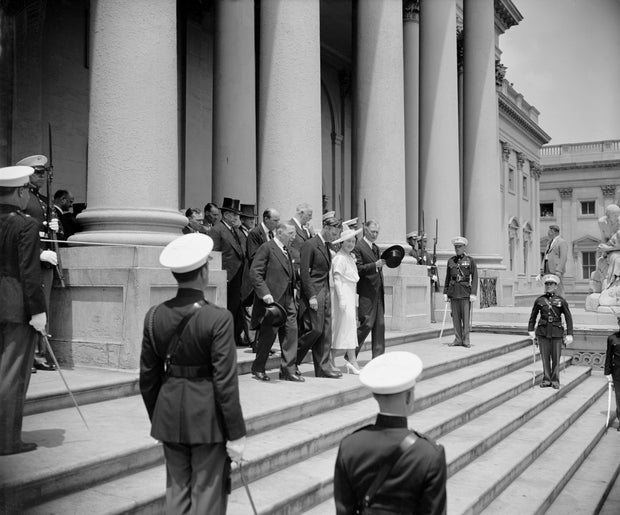
Few spectacles blend diplomacy, tradition, and public fascination quite like a British royal state visit to the United States. Cameras flash, crowds gather, and history quietly unfolds—not in textbooks, but in the grain of black-and-white film and the crisp resolution of modern digital photography. As King Charles III steps onto American soil for his first state visit as monarch, the moment invites reflection: how have royal visits evolved across decades, and what do the photos reveal about changing times, shifting alliances, and the personal diplomacy of kings and queens?
These images are more than souvenirs. They’re historical markers—capturing not just who stood where, but how the monarchy has navigated the world’s most powerful democracy.
The Power of Royal Imagery in U.S. Diplomacy
Photographs of British royals on American soil do more than document travel—they shape perception. A handshake with a U.S. president, a wave from an open-top car, or a toast at a White House dinner: these moments are choreographed with precision, yet their enduring power lies in their authenticity as seen through the lens.
Consider the visit of King George VI and Queen Elizabeth in 1939. Their arrival was captured in grainy newsreels and stills that now feel almost cinematic in their historical weight. The image of the royal couple at the foot of the steps of Union Station, greeted by President Franklin D. Roosevelt, wasn’t just a diplomatic formality—it was a visual pledge of solidarity on the brink of war. Photos from that trip helped humanize the British monarchy for a skeptical American public, many of whom still harbored republican sentiments.
Fast forward to Charles III’s 2023 arrival in Washington, D.C., and the photography is sharper, more immediate. Live streams, drone shots, and smartphone galleries flood social media within minutes. Yet the intent remains the same: to project continuity, respect, and mutual legacy.
1939: The First Royal Visit That Changed Everything
No royal trip to the U.S. carried more geopolitical weight than that of King George VI and Queen Elizabeth (the future Queen Mother). Arriving by train from Canada, they were the first reigning British monarchs to visit the United States.
Photos from the visit show them at the Roosevelts’ Hyde Park estate, picnicking on the lawn, feeding the President’s famous cow, and relaxing in casual dress—unprecedented informality for a monarch. These images were carefully curated to portray the King not as a distant sovereign, but as a relatable family man, sharing meals and laughter with the First Family.
The symbolism was potent. At a time when isolationism gripped America, the visit helped build emotional momentum toward Allied support. The photos—widely circulated in Life magazine and newspapers—played a crucial role in softening American attitudes toward British involvement in the looming war.
One iconic image shows the King and President Roosevelt toasting with bourbon at a Kentucky distillery, a gesture of goodwill and cultural exchange. It was a masterstroke of photo diplomacy: monarchy meeting democracy, not in marble halls, but over a shared drink.
Queen Elizabeth II: A Reign Documented in U.S. Soil
If George VI’s visit was pivotal, Queen Elizabeth II’s repeated journeys to America defined the modern era of royal diplomacy. From her first visit in 1957 to her final one in 2007, she made 26 official trips to the United States—each one richly documented in photo archives.
A striking image from 1957 shows the young Queen addressing a joint session of Congress, her blue dress and pearls glowing under the chamber’s lights. The moment was historic—she was the first British monarch to do so—and the photograph became a symbol of postwar reconciliation and enduring alliance.
:max_bytes(150000):strip_icc():focal(728x275:730x277)/princess-catherine-prince-william-donald-trump-king-charles-iii-trump-state-visit-uk-windsor-091725-8672599a27214b6f8ffdbb07fd7596e4.jpg)
Later visits revealed evolving cultural dynamics. In 1976, celebrating the U.S. Bicentennial, she toured Boston in a carriage, smiling despite the irony of a British monarch commemorating a revolution against her ancestors. Photos from that day capture both the humor and grace with which she navigated complex history.
In 1991, during the Gulf War, she visited U.S. troops in Saudi Arabia alongside President George H.W. Bush. Though not on American soil, the images were circulated widely in the U.S., reinforcing transatlantic unity. Her presence, captured in desert fatigues and a crisp smile, reminded the public that the monarchy still had a role in global crises.
By 2007, her final U.S. trip, the photos showed a more reflective figure. Meeting President George W. Bush at Camp David, the images were quieter, more personal—less about spectacle, more about legacy.
Prince Charles Before the Crown: A Decade of Preparation
Long before he became king, Charles made his mark in America. His first solo visit was in 1970, when, as Prince of Wales, he toured NASA facilities and met President Nixon. Photos from that trip show a youthful, slightly awkward Charles in a spacesuit mock-up, grinning beside astronauts—a moment of Cold War-era science diplomacy.
Over the decades, Charles returned frequently, often focusing on environmental causes. A 2005 photo shows him speaking at a climate conference in New York, flanked by American activists—a preview of the advocacy that would define his reign.
These visits weren’t always smooth. In 1995, during a trip shortly after his divorce from Diana, press coverage was intense. Photos of him alone at official events were interpreted as lonely, even melancholic. The camera, unforgiving, revealed not just the man, but the pressures of public life.
Yet his 2011 visit with Duchess Camilla marked a turning point. The images—walking through Central Park, attending a White House dinner—showed a more confident, settled figure. The American public, once skeptical, began to warm to him.
King Charles III’s State Visit: A New Era in Focus
The 2023 state visit of King Charles III and Queen Camilla arrived at a complex moment: climate crisis, strained transatlantic politics, and a monarchy under scrutiny. The photos from this trip tell a nuanced story.
Arriving at Joint Base Andrews, Charles descended the aircraft steps in military uniform, a nod to tradition. But the tone quickly shifted to warmth. At the White House, he was greeted not just by President Biden, but by first lady Jill Biden, who embraced Camilla with visible affection. The images of that embrace—personal, unscripted—were shared widely, humanizing the royal couple.
One powerful moment came during a reception honoring youth climate activists. Charles stood beside young leaders from the U.S. and Caribbean, listening intently. The photo—a close-up of his focused expression—contrasted sharply with older images of royals in stiff ceremony. This was monarchy as mentorship.
Another defining image: Charles and Biden walking the Colonnade, deep in conversation. The photo, taken from behind, shows two aging leaders, bent slightly with the weight of office, yet moving forward in step. It’s a metaphor as much as a moment.
The visit also embraced cultural diplomacy. Charles attended a reception at the Kennedy Center, where photos showed him laughing with American performers. Later, he visited a community garden in Anacostia, symbolizing his lifelong environmental mission on American soil.
What the Photos Reveal About Monarchy’s Role Today
The evolution of royal photography in the U.S. mirrors broader shifts in public expectations. Early images emphasized formality, distance, and pageantry. Modern photos prioritize access, emotion, and relatability.
In the 1930s, a royal photo was a rare event, published days later in newspapers. Today, it’s instantaneous—broadcast live, cropped for Instagram, memed by teenagers. The monarchy has adapted, using photography not just to inform, but to connect.
Yet challenges remain. Photos of opulence—gold carriages, diamond brooches—can clash with messages of climate action or social equity. Charles’s 2023 visit walked this line carefully: formal enough to honor tradition, humble enough to feel genuine.
:max_bytes(150000):strip_icc():focal(749x0:751x2)/king-charles-III-state-visit-of-the-president-of-the-republic-of-south-africa-112222-4-806910a78d3444cf87ef8dcb828390e0.jpg)
One photo from the White House state dinner—Charles toasting with a simple glass of water—spoke volumes. No alcohol, no extravagance. A small gesture, widely interpreted as a nod to sobriety and responsibility.
Behind the Lens: How Royal Photos Are Chosen
Not every image makes the cut. Royal visits involve teams of photographers, press officers, and communications strategists who curate the visual narrative.
Official photos are often taken by the Royal Household’s own photographers or accredited press. These emphasize dignity: straight-on portraits, ceremonial moments, symbolic handshakes.
But the most memorable images often come from candid shots—unscripted laughter, tired smiles, or spontaneous gestures. It’s these that resonate on social media and in public memory.
For example, the photo of Queen Elizabeth II laughing with President Reagan at a 1982 picnic remains iconic not because it was planned, but because it felt real. Similarly, Charles’s quiet conversation with a young activist in 2023 carried more weight than any formal portrait.
Media outlets also play a role. U.S. networks like CNN and ABC often replay key moments, while British outlets like the BBC highlight different angles—sometimes emphasizing heritage, sometimes controversy.
The Enduring Legacy of Royal Visits in American Memory
The photos of British royals in the U.S. are more than records—they’re cultural artifacts. They show how two nations, bound by language and history, navigate change together.
From George VI’s picnic at Hyde Park to Charles III’s climate roundtable, the imagery traces a century of alliance, adaptation, and mutual respect. These visits don’t alter policy overnight, but they reinforce bonds—between governments, and between people.
And as new monarchs emerge and new challenges arise, the camera will remain a silent diplomat, capturing not just who the royals are, but what they represent in the American imagination.
For anyone studying Anglo-American relations, reviewing these photos isn’t just nostalgic—it’s essential. They reveal the soft power of presence, the weight of a wave, and the quiet diplomacy of a well-placed smile.
As King Charles III’s visit fades into history, one thing is clear: the next chapter of royal-U.S. relations will be written not just in speeches and summits, but in the thousands of images taken—and shared—by millions.
Act now: Explore official archives at the National Archives or the Royal Collection Trust to see these historic photos in high resolution. Follow the royal family’s official social channels for real-time updates on future visits.
FAQ
Why are royal visits to the U.S. photographed so extensively? Royal visits are major diplomatic events, and photos serve as proof of alliance, goodwill, and cultural exchange. They’re used by both governments for public relations and historical documentation.
Did Queen Elizabeth II really visit the U.S. 26 times? Yes—between 1951 and 2007, she made 26 official trips to the United States, including state visits, private tours, and appearances at international events.
What was the most unusual royal visit to the U.S.? King George VI’s 1939 trip stands out—it was the first by a reigning monarch, included a picnic at the Roosevelts’, and helped sway American opinion toward supporting Britain in WWII.
How does King Charles III’s visit differ from past royal trips? His visit emphasizes climate action, intergenerational dialogue, and informal diplomacy, reflecting modern priorities. It also features more diverse cultural engagement than earlier, more protocol-driven visits.
Are royal visit photos staged? Many are carefully planned, but candid moments are encouraged to create relatable, humanizing images. Teams coordinate lighting, angles, and backdrops for key shots.
Can the public view original royal visit photos? Yes—many are archived by the U.S. National Archives, the Royal Collection Trust, and presidential libraries. Some are available online in high resolution.
Did any royal visit face public backlash in the U.S.? Prince Andrew’s visits after the Epstein scandal drew protests, and Diana-related trips in the late 1990s were met with emotional public reactions. The monarchy must navigate public sentiment carefully.
FAQ
What should you look for in Royal Moments: British Monarchs in America Through Photos? Focus on relevance, practical value, and how well the solution matches real user intent.
Is Royal Moments: British Monarchs in America Through Photos suitable for beginners? That depends on the workflow, but a clear step-by-step approach usually makes it easier to start.
How do you compare options around Royal Moments: British Monarchs in America Through Photos? Compare features, trust signals, limitations, pricing, and ease of implementation.
What mistakes should you avoid? Avoid generic choices, weak validation, and decisions based only on marketing claims.
What is the next best step? Shortlist the most relevant options, validate them quickly, and refine from real-world results.