:max_bytes(150000):strip_icc():focal(728x275:730x277)/princess-catherine-prince-william-donald-trump-king-charles-iii-trump-state-visit-uk-windsor-091725-8672599a27214b6f8ffdbb07fd7596e4.jpg)
Photographs of British royals on American soil do more than capture smiles and handshakes—they document the evolving alliance between two nations shaped by history, diplomacy, and shared culture. As King Charles III embarks on a state visit to the United States, the public's gaze turns once again to the visual archive of royal tours past. These images, preserved in news archives and private collections, reveal not only moments of protocol and pageantry but also subtle shifts in public perception, political context, and the personal diplomacy of the monarchy.
The current visit by King Charles III arrives at a moment when transatlantic relations face new global challenges: climate change, democratic resilience, and post-pandemic recovery. His presence—like those of his predecessors—carries symbolic weight. But it’s the photographs, more than speeches or policy statements, that crystallize these moments in public memory.
The Power of Royal Imagery in U.S.-UK Relations
Photographs of royal visits serve as cultural touchstones. They are disseminated across media, studied in classrooms, and shared widely on social platforms, reinforcing soft power dynamics between nations. When King Charles III walks through the White House gates or greets crowds in New York, every gesture is framed—literally—by decades of visual precedent.
These images often carry dual narratives: one of formality, the other of intimacy. A stiff handshake with a president contrasts with a candid laugh during a private dinner. A royal couple waving from an open-top car becomes an icon of unity, especially during times of crisis or celebration.
Consider the 1957 photo of Queen Elizabeth II and President Dwight D. Eisenhower at Camp David. Dressed casually, the two leaders stroll through pine woods—a rare image of informality that softened the Queen’s public image in America. That single photograph humanized a figure often seen as distant, helping shape favorable U.S. public opinion during the Cold War.
Edward VIII: The Unfinished Visit Before the modern era of televised tours, royal appearances in the U.S. were rare and often controversial. Edward VIII never officially visited as king—but his presence as Prince of Wales in the 1920s left a photographic legacy that foreshadowed both glamour and scandal.
Photos from his 1924 tour show a dashing young prince in flared trousers and newsboy caps, touring coal mines in Pennsylvania and riding horseback in Kentucky. American press dubbed him “the people’s prince,” drawn to his informality and media savvy. Yet these same images later took on a darker tone after his 1936 abdication to marry Wallis Simpson, an American divorcee.
One telling photo from Pittsburgh shows Edward shaking hands with steelworkers, his expression earnest. At the time, it symbolized royal accessibility. In hindsight, it captures a monarchy grappling with modernity—foreshadowing the tensions that would define future royal visits.
Queen Elizabeth II: The Defining Royal Presence
:max_bytes(150000):strip_icc():focal(749x0:751x2)/king-charles-III-state-visit-of-the-president-of-the-republic-of-south-africa-112222-4-806910a78d3444cf87ef8dcb828390e0.jpg)
No British monarch has been photographed more extensively in the U.S. than Queen Elizabeth II. Her visits spanned six decades, each one reflecting the political and cultural tone of its era.
1957: The Cold War Diplomat
Her first official U.S. visit as queen came in October 1957, a period of intense Cold War anxiety. The Soviet Union had just launched Sputnik, and U.S.-UK intelligence ties were crucial. The Queen’s 13-day tour was meticulously documented.
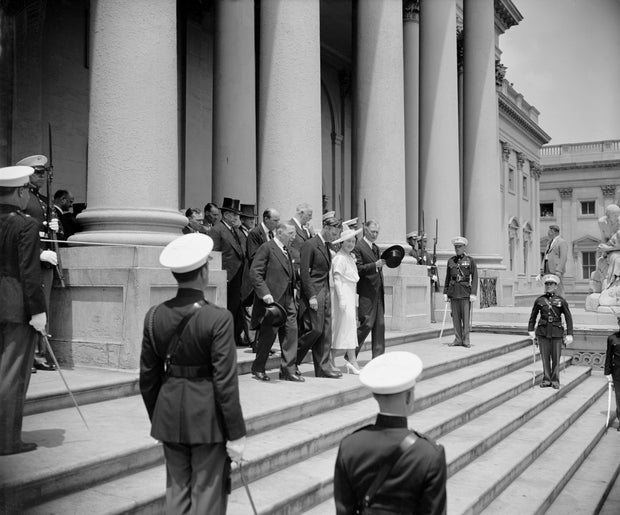
One iconic image shows her addressing a joint session of Congress, the first British monarch to do so. Dressed in pale pink with gloves and pearls, she stands at the podium—calm, poised, and resolute. The photo ran on front pages nationwide, reinforcing the special relationship at a moment of global uncertainty.
1976: Bicentennial Celebrations
During America’s bicentennial year, Queen Elizabeth II returned to mark 200 years of independence—a delicate diplomatic act. Photos from her visit to Boston Harbor show her aboard the frigate HMS Roebuck, smiling as she reviews a U.S. naval fleet. The image struck a perfect balance: honoring American sovereignty while celebrating shared heritage.
In Philadelphia, she toured Independence Hall. A widely circulated photo captures her peering at the Liberty Bell, her expression thoughtful. The moment became symbolic—a monarch acknowledging the birth of a republic that had once rejected her ancestors.
1991 and Beyond: Wartime Solidarity and Modern Ties
During the Gulf War, the Queen made a surprise visit to American troops stationed in Saudi Arabia—though not on U.S. soil, the images were widely shared in American media. Later, in 2007, she returned to commemorate the 400th anniversary of Jamestown, the first permanent English settlement in America.
A lesser-known but telling photo from that trip shows her laughing with then-Virginia Governor Tim Kaine during a reenactment. The informality signaled a shift: the monarchy engaging not just with power, but with people.
Prince Charles Before the Crown: A Decades-Long Connection
Long before becoming king, Charles made his mark in the U.S. through charitable work, environmental advocacy, and high-profile relationships. His 1993 visit to New York included a speech at the UN on climate change—years before the issue gained mainstream traction.
Photos from that era show a more introspective royal. In one, he walks alone through the redwoods of California, hands clasped behind his back—a rare moment of solitude captured by a press photographer. These images helped build a narrative of Charles as a thoughtful, if misunderstood, figure.
His 2011 visit with Duchess Camilla saw a warmer reception. In Washington, D.C., they attended a British-themed dinner at the State Department. A photo of Charles toasting with President Obama became emblematic of a new, more relaxed royal diplomacy.
King Charles III’s State Visit: A New Chapter
The current state visit by King Charles III arrives amid renewed focus on sustainability, youth engagement, and cultural preservation—issues central to his life’s work. Unlike past tours defined by Cold War politics or historical anniversaries, this visit leans into thematic diplomacy.

Photographs from the early days of the tour already reflect this shift. In Boston, he and Queen Camilla toured a climate resilience project in East Boston, inspecting flood barriers with local engineers. The image—Charles in a trench coat, pointing at a map—positions him not as a ceremonial figure, but as an engaged participant in global challenges.
Another moment, less publicized but equally telling: Charles greeting young apprentices at a vocational training center in Detroit. The photo shows him crouched to speak eye-level with a teen in a mechanic’s uniform—a subtle contrast to the formal portraiture of earlier monarchs.
These visuals are deliberate. They reflect a strategy to modernize the monarchy’s image, particularly among younger Americans who may view the institution with skepticism.
The Role of Media and Public Perception
Each royal visit is shaped as much by media coverage as by diplomatic planning. The 1985 visit of Queen Elizabeth II and Prince Charles, for instance, coincided with the peak of Charles and Diana’s marriage—and the beginning of its unraveling.
Photos from that tour show a dazzling public couple: arriving in Los Angeles, attending a polo match, dining with Hollywood elites. One image of Diana laughing with Ronald Reagan at a White House dinner became iconic. But behind the scenes, tensions were mounting. Later revelations cast a shadow over those images, turning them into artifacts of a marriage—and a media spectacle—in decline.
Today, the media landscape is more fragmented. Royal photos go viral not just through newspapers but via TikTok, Instagram, and meme culture. A single image—say, King Charles pausing to pet a service dog at a veterans’ center—can spark thousands of shares and comments within hours.
This demands sharper image control. The Royal Household now works closely with U.S. hosts to stage moments that feel authentic but align with strategic messaging. The goal isn’t just visibility—it’s emotional resonance.
What These Photos Reveal About the Monarchy’s Future
The visual record of royal visits tells a story of adaptation. From Edward VIII’s flapper-era charm to Elizabeth II’s steely composure to Charles III’s focus on purpose-driven engagement, each monarch has used photography to shape their role in the American imagination.
King Charles III’s visit may lack the grand spectacle of past tours. There are no state dinners on aircraft carriers or royal yacht arrivals. But the photos emerging from this trip suggest a different kind of significance—one rooted in substance over splendor.
They show a king who listens more than he speaks, who visits community centers instead of just capitals, and who uses symbolism not for nostalgia, but for forward-looking dialogue.
As the U.S. and UK navigate a complex global landscape, these images may come to represent not just a state visit, but a recalibration of the special relationship itself.
Closing: The Lasting Image of Leadership
Royal visits don’t change policy overnight. But the photographs they produce can shift perceptions—one frame at a time. As King Charles III continues his tour, the world watches not just for what he says, but for how he is seen. In an age of instant communication, that visibility is its own form of leadership.
For communicators, historians, and citizens alike, the lesson is clear: in diplomacy, a single photograph can outlast a thousand speeches. Study them closely—they’re not just memories. They’re messages.
FAQ
What was the first official visit by a British monarch to the U.S.? Queen Elizabeth II’s 1957 tour was the first official state visit by a reigning British monarch.
Did King Charles III visit the U.S. before becoming king? Yes, Charles visited the U.S. over 20 times before his accession, including trips for charity, environmental causes, and diplomatic events.
How are royal visit photos selected for public release? The Royal Communications team works with U.S. hosts and official photographers to release images that align with the visit’s themes and tone.
Why are state visits important for the British monarchy? They reinforce diplomatic ties, project soft power, and help maintain global relevance, especially in countries like the U.S. with strong cultural influence.
Has any British royal faced controversy during a U.S. visit? Edward VIII’s relationship with Wallis Simpson drew media scrutiny during his pre-abdication tours. More recently, Prince Andrew’s 2010 visit faced protests due to his association with Jeffrey Epstein.
How has media coverage of royal visits changed over time? Early visits were covered by newspapers and newsreels; today, coverage spans live streams, social media, and viral content, increasing both reach and scrutiny.
What role does the U.S. First Family play in hosting royal visits? They co-host official events, participate in ceremonies, and help shape the public narrative through joint appearances and shared photo opportunities.