Every year, hundreds of workers suffer serious injuries or fatalities during equipment servicing—despite a simple, proven solution. The root cause? Improper or absent lockout tagout procedures. At the heart of any effective energy control program is a well-designed lockout tagout (LOTO) kit. These kits aren't just boxes of plastic and metal—they're engineered systems that prevent accidental machine startup, protect maintenance teams, and ensure regulatory compliance.
A LOTO kit is only as strong as its components, accessibility, and user adherence. Businesses that treat these kits as afterthoughts risk catastrophic failure. But when implemented correctly—with the right tools, training, and consistency—LOTO kits become a cornerstone of workplace safety.
This guide breaks down what makes a LOTO kit effective, which components are non-negotiable, and how to select or upgrade your system for maximum impact.
Why a LOTO Kit Is More Than Just a Compliance Checkbox
OSHA’s lockout tagout standard (29 CFR 1910.147) isn’t a suggestion—it’s a legal requirement for any facility where hazardous energy could injure workers during servicing or maintenance. But treating LOTO solely as a compliance exercise misses the point. The real value lies in preventing incidents before they happen.
Consider this: a maintenance technician begins diagnosing a jammed conveyor belt. The machine appears off. But an operator, unaware of the repair, restarts the system remotely. Without proper lockout, that technician could be crushed, amputated, or killed. This isn’t hypothetical—these scenarios happen in manufacturing, food processing, and utility operations every year.
A comprehensive LOTO kit eliminates this risk by providing a standardized method to isolate energy sources and communicate service status. It's not just about locking a valve or tagging a switch—it's about creating a culture of accountability and visibility.
Core Components of an Effective LOTO Kit
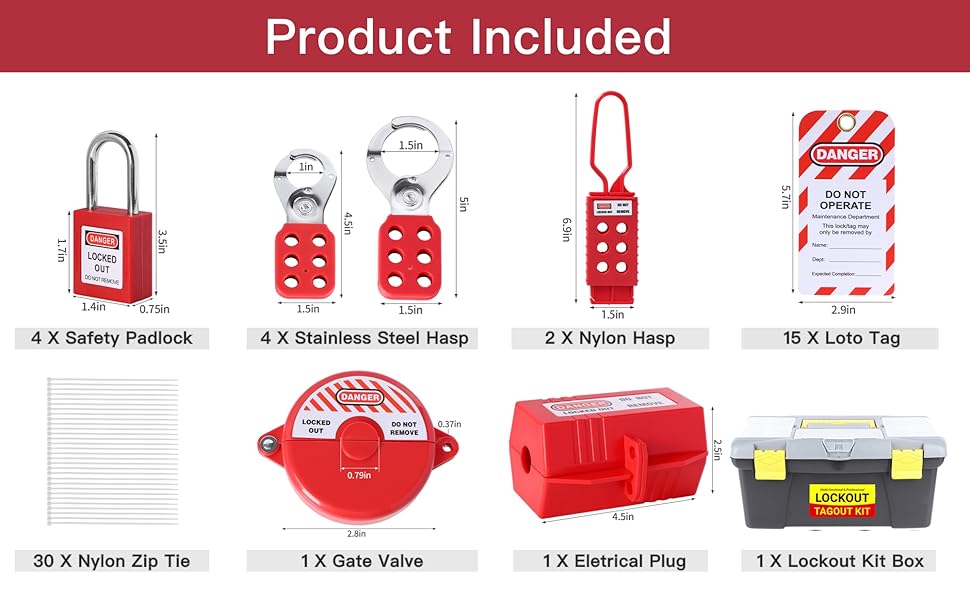
A functional LOTO kit isn’t a random collection of parts. It must include specific tools to cover mechanical, electrical, hydraulic, pneumatic, chemical, and thermal energy sources. Here are the essential elements:
Lockout Devices These physically prevent energy isolation devices from being turned on. Common types include: - Valve locks – For gate, ball, and butterfly valves - Circuit breaker locks – Fit over breakers to prevent flipping - Plug lockouts – Secure electrical cords from being reinserted - Group lockboxes – Allow multiple workers to apply individual locks to a single energy source
Tagout Tags Tags serve as visual warnings and communication tools. They must be durable, tamper-resistant, and include fields for: - Employee name - Department - Date and time of lockout - Reason for isolation
Tags are not substitutes for locks—but they complement them by adding context.
Hasps and Lockout Stations A lockout hasp enables multiple locks to be applied to one isolation point. This is critical during group maintenance where several technicians are working on the same machine. Padlocks used with hasps should be standardized—ideally, non-keyed alike (NKA) so any authorized employee can apply a lock, but only they can remove it.
Specialty Items Depending on your facility, you may need:
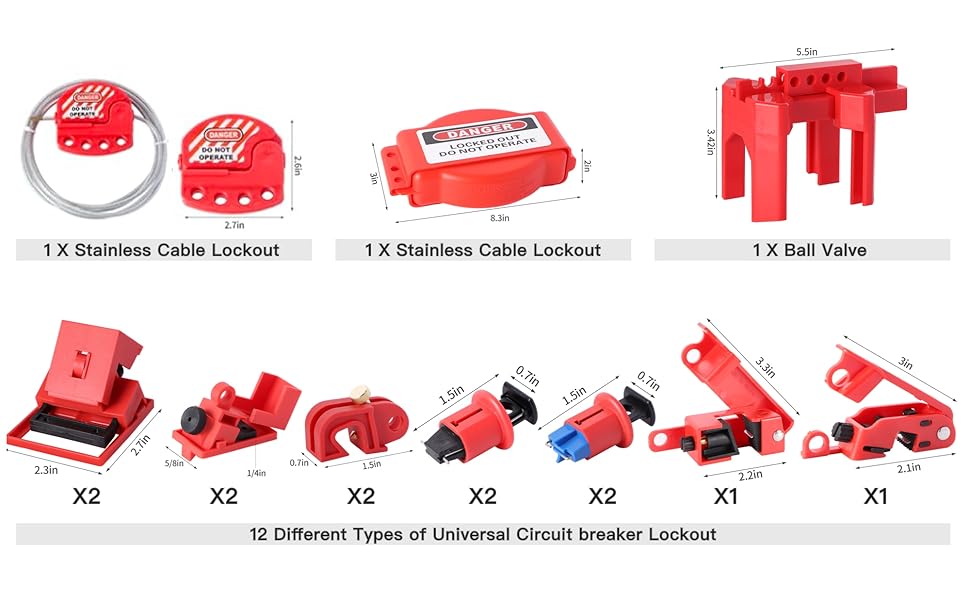
- Pin locks for disconnect switches
- Chain lockouts for larger valves
- Universal lockout brackets for irregularly shaped disconnects
- Cable lockouts with adjustable steel cables for oversized handles
A well-stocked LOTO kit anticipates real-world variability—not just textbook scenarios.
Common Mistakes That Undermine LOTO Effectiveness
Even facilities with kits in place often fail due to procedural gaps. Awareness of these pitfalls can prevent disaster.
Using Tags Without Locks Tagout-only procedures are permitted under OSHA but only when energy isolation cannot be physically locked. Relying solely on tags—even when locks are feasible—is a violation and increases risk. Tags can be ignored, lost, or removed accidentally. Locks enforce compliance.
Incomplete Energy Source Identification
Many kits are designed for electrical systems but ignore pneumatic lines or hydraulic accumulators. A comprehensive energy control plan must map all hazardous energy sources—not just the obvious ones.
Poor Kit Accessibility If a LOTO kit is stored in a locked cage or on a high shelf, technicians are more likely to skip it. Kits should be located near high-risk machinery or distributed across departments for immediate access.
Lack of Training Reinforcement Employees may receive initial LOTO training but never refresh it. OSHA requires retraining every 12 months or after procedural changes. Without reinforcement, shortcuts become routine.
Choosing the Right LOTO Kit for Your Operation
Not all kits are created equal. The right choice depends on your industry, equipment complexity, and workforce size.
Small Workshops or Single-Equipment Sites A basic LOTO kit with 5–10 locks, tags, and a few valve and breaker lockouts may suffice. These are typically compact, portable, and affordable.
Mid-Sized Manufacturing Facilities
These environments need modular kits with multiple lock types, group lockout boxes, and bilingual tags. Consider kits with customizable storage trays for organization.
Large Industrial Plants For complex operations, invest in site-specific kits. These may include: - Dedicated kits per machine or production line - RFID-enabled locks for digital tracking - Color-coded locks by department or energy type - Centralized LOTO management software integration
Portable vs. Stationary Kits Portability matters. Some maintenance teams carry personal LOTO pouches. Others rely on wall-mounted stations near machinery. The best approach often combines both—a central station with individual mini-kits for mobility.
Top 5 LOTO Kits for Real-World Use
| Brand | Model | Key Features | Best For |
|---|---|---|---|
| Grace Industries | 700-42 | 42-piece kit, includes circuit breaker lockouts, valve locks, hasps, tags | General manufacturing |
| Seton | 54796 | 25-piece kit with bilingual tags, wall-mount case | Facilities with multilingual staff |
| RS Pro | LOTO-02 | Compact, corrosion-resistant components | Food processing, wet environments |
| Jonard Tools | LOKIT-6 | Includes cable lockouts, padlocks, tags, and storage bag | Field service and mobile teams |
| Safeguard | SGK-100 | Heavy-duty steel lockout hasps, OSHA-compliant tags | High-risk industrial settings |
When selecting a kit, verify that materials are durable (e.g., UV-resistant plastic, stainless steel), locks are keyed differently per employee, and tags meet OSHA’s durability requirements (e.g., won’t fade or tear easily).
Integrating LOTO Kits into Daily Operations
Having a kit is only step one. Real safety comes from consistent use.
Start by mapping all energy sources in your facility. Conduct a LOTO audit: observe maintenance tasks, identify isolation points, and verify that your kit covers them all.
Train employees not just on how to use the kit, but why. Simulate lockout scenarios during drills. Make tag completion mandatory—blank or incomplete tags are as dangerous as no tags at all.
Designate LOTO coordinators in each department. Their role: inspect kits monthly, replace worn parts, and ensure compliance during audits.
Finally, document every lockout. Some companies use digital logs; others use tag duplicates stored in a central file. Either way, traceability is key for incident investigations and OSHA inspections.
The Cost of Skipping a Proper LOTO Kit
The financial and human cost of skipping lockout procedures dwarfs the price of even the most advanced kit. OSHA fines for LOTO violations routinely exceed $15,000 per incident. But beyond penalties, consider: - Downtime from preventable accidents - Workers’ compensation claims - Loss of skilled labor - Reputational damage
A single serious injury can cost hundreds of thousands in direct and indirect expenses. A $300 LOTO kit isn’t an expense—it’s insurance.
Build a Safer Workplace Starting Today
A lockout tagout LOTO kit is not a regulatory burden—it’s a lifeline. Whether you’re managing a small machine shop or a sprawling plant, the foundation of energy control starts with the right tools in the right hands. Audit your current setup. Replace worn or missing parts. Train your team—not once, but continuously. Make LOTO part of your operational rhythm, not an afterthought.
Choose a kit that matches your real-world needs, not just the minimum. Empower every technician with the means to work safely. Because when the power is off, the only thing that should be running is peace of mind.
FAQ What is included in a standard LOTO kit? A standard LOTO kit typically includes lockout hasps, padlocks, valve locks, circuit breaker lockouts, plug covers, safety tags, and sometimes a storage case. Additional items may include group lockout boxes and cable lockouts depending on the model.
Can tagout be used without a lock? Yes, but only under specific OSHA conditions where energy isolation cannot be physically locked. Tagout-only procedures require additional safety measures and are considered less secure than lockout.
How many padlocks should a LOTO kit have? The number depends on your team size and complexity of tasks. Kits range from 5–20+ locks. Each authorized employee must have their own unique lock.
Are LOTO kits required by OSHA? While OSHA doesn’t mandate a specific “kit,” it requires that employers implement an energy control program with appropriate lockout devices and tags—effectively making a LOTO kit essential for compliance.
What makes a good LOTO tag? A good tag is durable, tamper-resistant, and includes fields for employee name, department, date, time, and reason for lockout. It should be standardized across the facility.
Can one LOTO kit serve an entire factory? Not ideally. Large facilities benefit from multiple kits strategically placed near high-risk equipment. Relying on a single central kit increases the chance of non-use due to accessibility issues.
Do LOTO kits need to be inspected? Yes. OSHA requires periodic inspections—at least annually—of energy control procedures. Kits should be checked monthly for missing, broken, or worn components.
FAQ
What should you look for in What Every Workplace Needs in a Lockout Tagout LOTO Kit? Focus on relevance, practical value, and how well the solution matches real user intent.
Is What Every Workplace Needs in a Lockout Tagout LOTO Kit suitable for beginners? That depends on the workflow, but a clear step-by-step approach usually makes it easier to start.
How do you compare options around What Every Workplace Needs in a Lockout Tagout LOTO Kit? Compare features, trust signals, limitations, pricing, and ease of implementation.
What mistakes should you avoid? Avoid generic choices, weak validation, and decisions based only on marketing claims.
What is the next best step? Shortlist the most relevant options, validate them quickly, and refine from real-world results.

:max_bytes(150000):strip_icc():focal(728x275:730x277)/princess-catherine-prince-william-donald-trump-king-charles-iii-trump-state-visit-uk-windsor-091725-8672599a27214b6f8ffdbb07fd7596e4.jpg)